It took less than 90 seconds. That’s how long surveillance footage showed a group of criminals spending at a suburban Johannesburg gate — a short crowbar, a sharp lever, and the bolt-on lock gave way without a fight. By the time the armed response vehicle turned onto the street, the crew was gone. This scene plays out across South Africa with alarming regularity. According to Statistics South Africa, an estimated 1.5 million housebreaking incidents occurred in 2024/25, affecting 5.7% of all households. Understanding exactly how criminals get in — and which lock choices can stop them — is the most practical step any homeowner or business owner can take.
How South African Burglars Actually Get In
Forget the Hollywood image of a gloved thief picking a deadbolt in the dark. The reality in South Africa is far more blunt. Fidelity ADT security experts identify the six most common methods criminals use to enter homes as: forcing locks on gates, forcing locks on doors, breaking windows and burglar bars, climbing over walls, using inside information, and impersonation. Of these, forced entry through gates and doors is by far the most prevalent — and the most preventable.
Here are the specific methods used most frequently:
- Crowbar attacks on gates and doors
The “crowbar gang” method has become one of the most well-documented criminal techniques in South Africa. A short crowbar is inserted between the gate and the frame, and pressure is applied until the lock disengages from its striker plate. Bolt-on and surface-mounted locks are particularly vulnerable because the lock housing itself can be pried away from the gate, leaving the mechanism exposed. Entry is typically gained in under two minutes.
- Lifting sliding gates off their rails
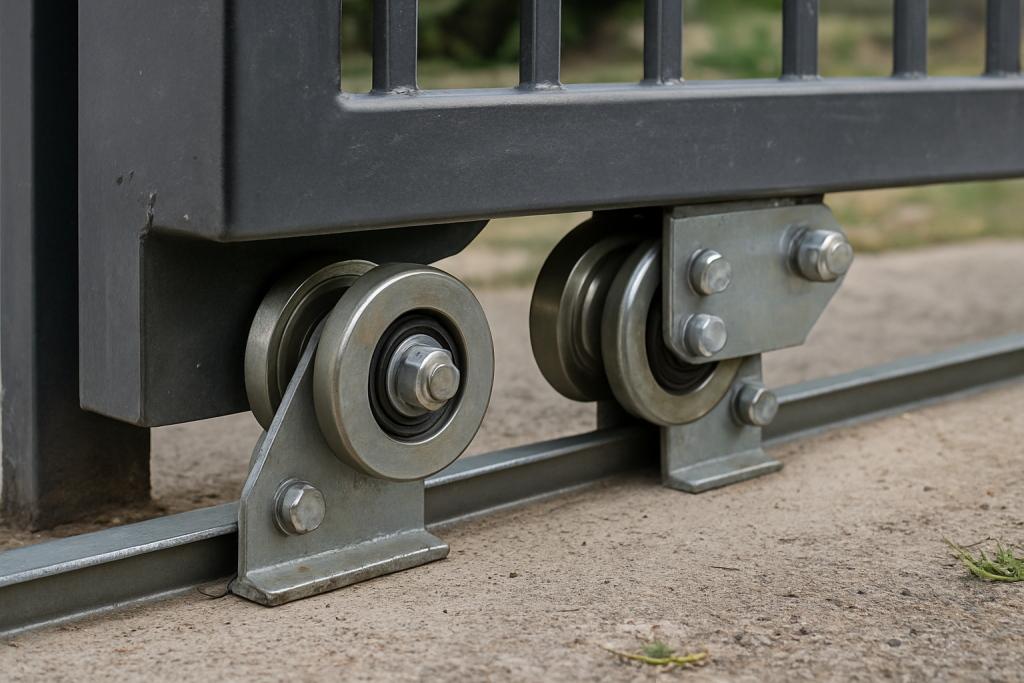
Sliding gates with no anti-lift protection are a notorious weak point. Criminals simply lift the gate body upward and off its bottom rail, bypassing the lock entirely — regardless of how good the lock is. The lock is never even engaged; the gate just moves around it.
- Forcing padlocks or cutting lock hasps
Padlocks on gates or outbuildings can be cut with bolt cutters or smashed with a hammer. Even hardened padlocks can be overcome if the hasp or staple they’re attached to is made of thin steel — the lock holds, but the surrounding metal doesn’t.
- Kicking or prying doors
Research shows that the majority of residential burglaries involve entry through doors, not windows, as many assume. A solid kick to a hollow door, or a crowbar applied to a poorly fitted frame, is often all it takes. Doors with weak strike plates or short bolt throws offer very little resistance.
- Social engineering and impersonation
Criminals posing as municipal workers, security personnel, or delivery drivers use social tactics to gain access. Once inside a gate, the physical lock no longer provides protection. Inside information from domestic staff has also been widely reported — studies suggest that up to 8 in 10 South African residential burglaries involve information provided by someone known to the homeowner.
What the Right Lock Actually Stops
Understanding the attack method reveals exactly what a quality lock needs to do. The goal is not just to be “locked” — it’s to resist the specific forces that criminals apply.
A high-quality gate lock must:
- Withstand lateral crowbar force — meaning the lock body must be fully integrated into the gate frame with no exposed housing to lever against. A weldable lock, fused directly into the steel frame, eliminates the gap that a crowbar needs to find purchase.
- Prevent bolt disengagement under pressure — a 12mm solid steel lock pin, as found in well-engineered weldable locks, resists the bending and shearing forces that forced entry creates. Thin or hollow pins fail quickly under crowbar load.
- Offer emergency lockdown capability — in the event of a fast-moving threat, a lock with an emergency push-pin function allows instant securing without fumbling for keys. This is critical when seconds matter.
- Protect against gate lifting — a lock integrated tightly into the gate frame, combined with anti-lift brackets, removes the ability to bypass the lock by simply lifting the gate.
- Resist corrosion and wear — a lock that has degraded over time offers diminished resistance. Yellow zinc electroplated internal components maintain mechanical integrity across years of outdoor exposure.
The Difference Between a Deterrent and a Defence
Security research consistently shows that forced entry accounts for the overwhelming majority of break-ins — with lock picking representing only around 4% of cases. This means the quality of your lock’s physical construction matters far more than its key complexity. A visually intimidating lock that fails under a crowbar is a deterrent only until a criminal tests it. A structurally sound lock — fully welded into a solid steel frame — is a genuine defence.
The most important access points to secure are, in order of priority:
- The pedestrian gate — the most commonly forced entry point; fit a weldable lock with a solid pin and no exposed housing
- The main vehicle gate — ensure anti-lift brackets are fitted and the lock mechanism is inaccessible through the gate bars
- All external doors — use a quality deadbolt with a throw bolt of at least 25mm and a reinforced strike plate
- Outbuildings and toolrooms — avoid padlocks on hasps; opt for integrated lock boxes welded into the door frame
Conclusion
South African criminals are opportunistic, fast, and experienced at identifying weak points in a property’s security. The right lock doesn’t just slow them down — it removes the easy options entirely. A gate with no exposed lock housing, a solid steel pin, and a frame-integrated mechanism forces criminals to make noise, take time, and risk exposure. For most opportunistic burglars, that’s enough to make them move on.
Wondering whether your current gate and door locks would hold up to forced entry? Ultralock manufactures South Africa’s most trusted range of weldable security gate locks — engineered specifically to resist the forced entry methods used most commonly in this country. Browse the full Ultralock product range to find the right lock for every gate and access point on your property, or get in touch with the team for expert advice on securing your home or business.