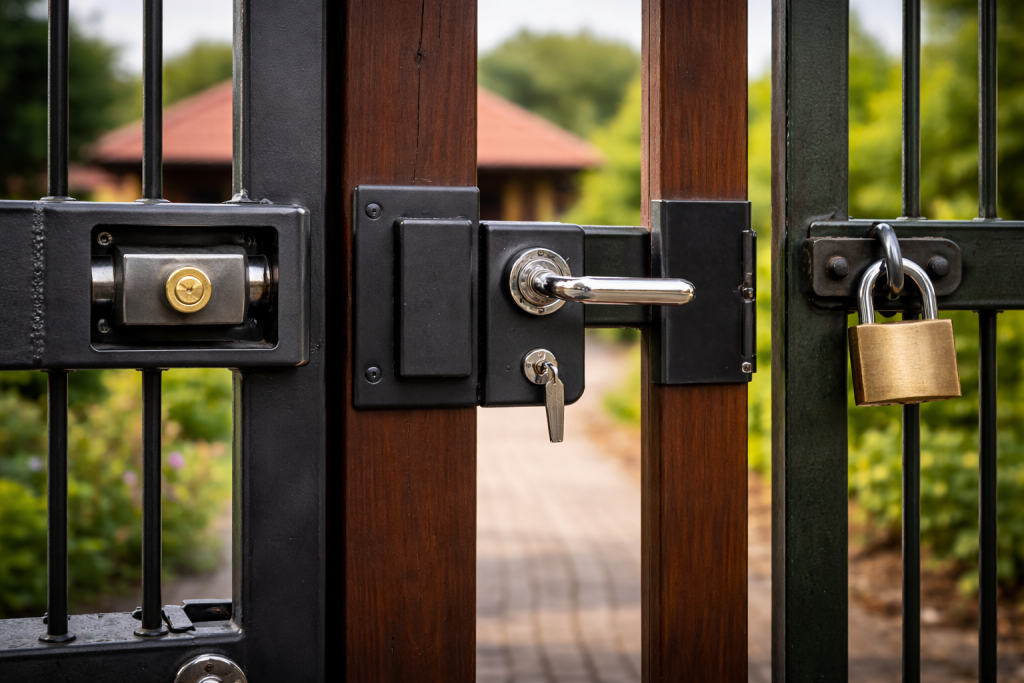
Gate Security During Load-Shedding: Mechanical vs Electric Door Locks
Load-shedding has become a daily reality in South Africa, and while it disrupts routines, the impact on home and business security is often underestimated. When the power goes out, many gate motors, electric locks, access systems, and automated mechanisms stop functioning entirely or become unreliable. Criminals know this—and use these vulnerable moments to target weak points in gates, fences, and doors. This guide breaks down the differences, risks, and recommendations to help you secure your property—no matter how long the power stays off.
The Impact of Load-Shedding on Gate Security
Electric gates and electronic locks are convenient under normal conditions, but load-shedding exposes their weaknesses. When the power drops, the entire system shifts into a vulnerable state.
Common problems include:
- Gate motors switching off mid-operation
- Electric locks failing to engage or stay locked
- Maglocks release when power is lost
- Keypads, fingerprint readers, and access controllers are shutting down
- Backup batteries are draining too quickly during frequent outages
Even when a gate motor has a battery, long or repeated power cuts reduce the battery’s performance. As the battery depletes, the gate becomes slower, weaker, and easier to force open. In some cases, gates are left stuck halfway or completely unlocked.
For criminals, this is an opportunity—an unpowered electric system is far easier to breach than people realise.
Also read: How to Choose the Right Lock for Types of Gates
What Happens to Electric Door & Gate Locks During Power Cuts?
Electric locking systems rely on a constant power supply or backup battery to stay engaged. When that power is interrupted, their behaviour depends on the type of lock:
Electric Strike Locks
These locks require electricity to release the latch. With no power, they often remain unlocked or stuck in a failure state.
Maglocks
Maglocks are typically fail-safe, meaning they unlock automatically when power is lost. This is ideal for fire escapes but risky for perimeter security since a power cut leaves the gate open.
Keypads and Biometric Readers
When backup batteries drain, these devices switch off completely, preventing authorised access and leaving the gate dependent on manual override—if one exists.
Gate Motors
Under power strain or low battery conditions, motors become weaker and can be forced open with minimal effort.
In short, electric locks offer convenience, not resilience during power cuts.
You need to know all about: Emergency Preparedness: Secure Your Gate Locks
Mechanical Door & Gate Locks: How They Perform During Load-Shedding
Mechanical locks require no electricity, remaining fully functional regardless of power availability. This makes them the most reliable security measure during load-shedding.
For security gates, pedestrian entrances, side access doors, tool rooms, and steel enclosures, mechanical locks—especially weldable steel locks—provide consistent, dependable protection.
Key Benefits of Mechanical Locks:
- No reliance on electricity or batteries
- Unaffected by load-shedding or surges
- Highly resistant to forced entry
- Long lifespan with minimal maintenance
- Offer strong physical security 24/7
Ultralock’s weldable mechanical locks are designed specifically for environments where strength and reliability matter. Many include features like:
- Emergency push-pin mechanisms for fast manual lockdown
- Heavy-duty steel construction
- Precision-engineered locking pins
- Options for keyed-alike systems
When everything else shuts off during load-shedding, mechanical locks continue to protect your property.
Mechanical vs Electric Locks: A Direct Comparison
Below is a practical side-by-side view of how each option performs in real scenarios:
Mechanical Locks
- Always operational—no power required
- Highly resistant to prying, force, and tampering
- Reliable for gates, side doors, and high-risk points
- Ideal for long-term durability
- Recommended as the primary locking method
Electric Locks
- Convenient for daily use
- Depend on continuous electricity
- Vulnerable during outages and battery failures
- Often fail open, leaving gates unlocked
- Useful as a secondary or supplementary system
Conclusion: Mechanical locks offer superior reliability during load-shedding, while electric locks provide convenience—not core security.
Similar read: Weld-In vs Surface-Mounted Gate Locks
Should You Use Both Mechanical and Electric Locks?
In many homes and businesses, the best approach is a combined system.
A dual-security setup uses:
- An electric system for automated opening and closing
- A mechanical lock as the main physical barrier
This ensures that even if the gate motor fails, the mechanical lock remains engaged. For example, a sliding gate may operate automatically when powered, but a mechanical deadlock secures it in place once closed.
Many security professionals recommend:
- Electric = convenience
- Mechanical = security
Weldable locks, deadbolts, and pin-based systems, which can be found at Ultralock, are ideal for this layered approach.
When Mechanical Locks Are Essential (High-Risk Scenarios)
There are situations where relying solely on electric gate locks is unsafe. Mechanical locks are essential in:
- High-crime neighbourhoods
- Complexes and estates with shared access points
- Businesses storing tools, stock, or equipment
- Workshops, factories, and construction sites
- Properties with sliding or swing gates that can be forced
- Areas experiencing extended power outages
In these contexts, mechanical locks aren’t just recommended—they’re critical.
Conclusion
Load-shedding exposes the vulnerability of electric locking systems. While they offer convenience, they simply cannot guarantee consistent protection when the power goes out. Mechanical locks, on the other hand, provide dependable, continuous security—making them essential in South Africa’s unpredictable power environment.
Upgrade your gate security with Ultralock’s range of high-strength mechanical locks built to perform during load-shedding and beyond. From weldable gate locks to durable deadbolts and emergency push-pin systems, Ultralock offers long-lasting protection when you need it most. Contact us today for expert advice on choosing the right lock for your door, gate, and property.