What Is the Best Lock for a Gate?
It only takes one moment to realise how important a gate lock really is. A strange noise outside. A gate rattling in the wind. You peer through the window and notice the gate isn’t fully secure. In that moment, it becomes clear: your gate is the first line of defence between your home and the outside world. And if the lock isn’t up to the job, everything behind it is at risk.
Choosing the right gate lock is not just about keeping a gate closed. It’s about security, reliability, and peace of mind. This guide answers a common question homeowners ask before upgrading their security: what is the best lock for a gate?
Why Gate Locks Matter More Than You Think
Gates are often targeted because they are exposed and frequently rely on weaker locking mechanisms than doors. According to Stats SA, residential burglary remains one of the most common property crimes in South Africa, with access often gained through external entry points such as gates and garages.
Security experts estimate that over 30% of forced-entry incidents involve compromised or inadequate gate locks. This makes the decision around what is the best lock for a gate critically important for homeowners.
What Makes a Gate Lock “The Best”?
To determine what is the best lock for a gate, it’s essential to understand the features that truly matter.
1. Strength at the Point of Entry
The strongest gate locks are designed to protect the exact point where force is applied. Weldable steel locks outperform surface-mounted or bolt-on options because they cannot be easily pried open or removed.
Welded steel lock housings can withstand up to 60% more force than externally mounted locks.
2. Resistance to Tampering
A gate lock must resist drilling, cutting, and levering. Internal locking mechanisms protected by steel casings significantly reduce the risk of forced entry.
When asking what is the best lock for a gate, homeowners should prioritise locks with concealed or reinforced locking pins and hardened internal components.
3. Reliability During Power Failures
South Africa’s load-shedding reality has highlighted the importance of mechanical security. Gate locks that function independently of electricity ensure access control even when automated systems fail.
Mechanical locks are recommended as a backup by Crime Prevention Through Environmental Design (CPTED) guidelines.
4. Emergency Locking Capability
In high-risk situations, speed matters. Locks that allow for quick manual locking without fumbling for keys provide a critical safety advantage.
Learn about: Swing Gate Lock: Strengthen Property Security
Common Gate Lock Types (And Their Limitations)
Understanding the options helps clarify what is the best lock for a gate.
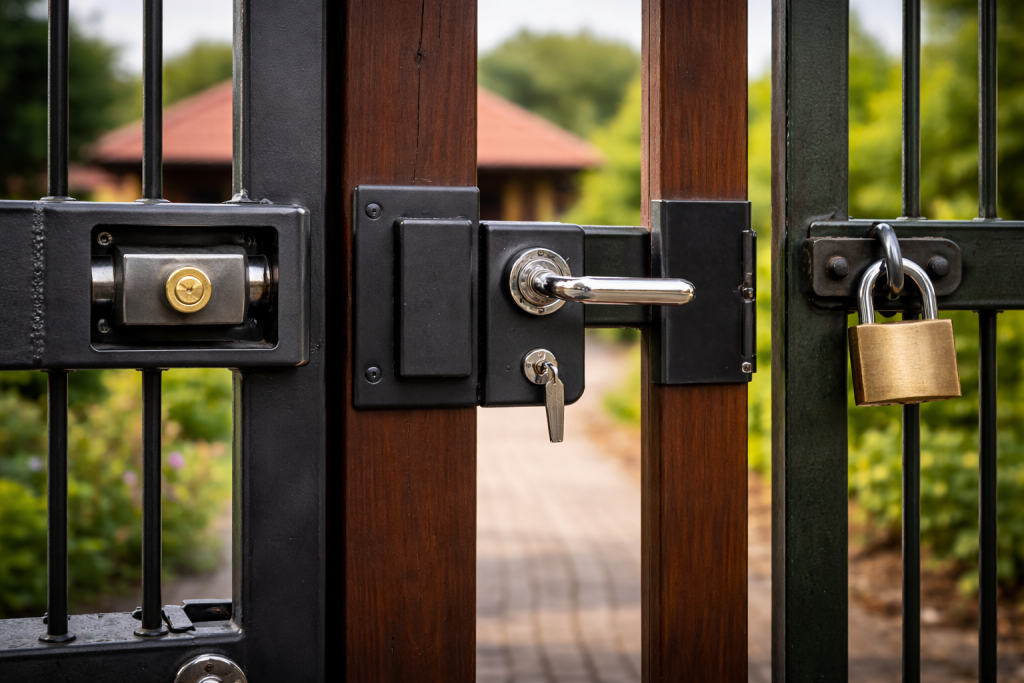
- Padlocks: Affordable but vulnerable to cutting and leverage attacks
- Surface-mounted locks: Easy to install but often exposed
- Electric locks: Convenient but dependent on power and electronics
- Weld-in gate locks: Designed for strength, durability, and long-term security
Industry data shows that weld-in gate locks have a significantly lower failure rate than surface-mounted alternatives in high-crime areas.
Why Ultralock Gate Locks Stand Out
When evaluating what is the best lock for a gate, Ultralock’s gate locks consistently stand out due to their purpose-built design. Their locks are engineered to be welded directly into steel gates, protecting the locking mechanism inside a robust steel casing.
Ultralock gate locks are designed with solid steel locking pins, reinforced housings, and corrosion-resistant internal components. This construction improves resistance to forced entry and extends the lifespan of the lock in outdoor conditions.
Another key advantage is emergency locking functionality, allowing users to secure the gate quickly when needed. This feature is particularly valuable for homeowners who prioritise fast response and personal safety.
For both residential and commercial properties, these design principles directly address the core question: what is the best lock for a gate when security cannot be compromised?
Residential vs Commercial Gate Lock Requirements
Residential properties typically require locks that balance strength with ease of daily use. Commercial and industrial sites demand higher durability due to frequent access cycles and heavier gates.
Commercial gate locks experience up to five times more daily usage than residential locks, making material quality and internal engineering critical.
Choosing a lock rated for your specific environment is a key step in answering what is the best lock for a gate in your situation.
Also read: The Ultimate Guide to Security Gate Lock Boxes
Long-Term Value and Maintenance
High-quality gate locks reduce maintenance costs over time. Premium gate locks last up to three times longer than budget alternatives, even in harsh outdoor environments.
A durable gate lock also protects other components, such as hinges and frames, by reducing misalignment and forced movement.
Conclusion: So, What Is the Best Lock for a Gate?
The best lock for a gate is one that combines strength, tamper resistance, reliability, and fast response when it matters most. Weld-in gate locks with reinforced steel construction offer superior protection compared to exposed or power-dependent options. By investing in a purpose-built solution, homeowners can secure their property more effectively and reduce long-term risk. When safety is the priority, choosing the right gate lock is not a detail — it’s a decision that protects everything behind it.
Is your gate lock strong enough to protect your home when it matters most? If you’re looking for a reliable, high-security solution, the team at Ultralock can help you choose the right gate lock for your needs. Contact us today for expert advice and proven gate lock solutions designed to secure your home with confidence. Visit our website or head to our contact us page to get in touch.